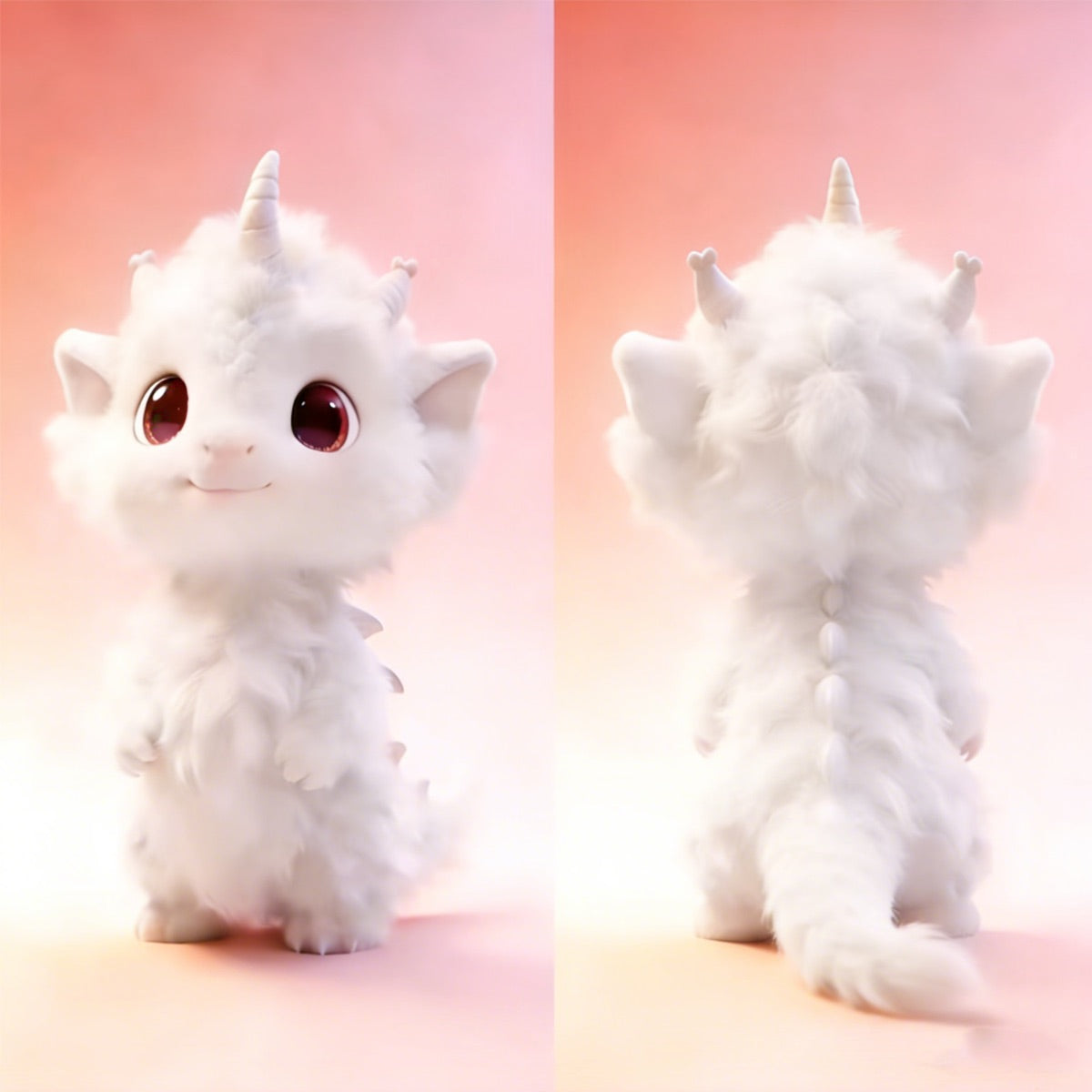
Building a custom AI toy is not one design task. It is a coordinated product-development process that connects industrial design, toy manufacturing, electronics, firmware, cloud AI, app configuration, testing and compliance.
For brands entering this category, the most important early decision is to define which parts should be customized and which parts should use mature existing technology.
1. Start with the Product Experience
Before selecting a chipset or AI model, define what the user should experience.
Examples include:
- open-ended AI conversation,
- educational Q&A,
- parent-recorded messages,
- touch interaction,
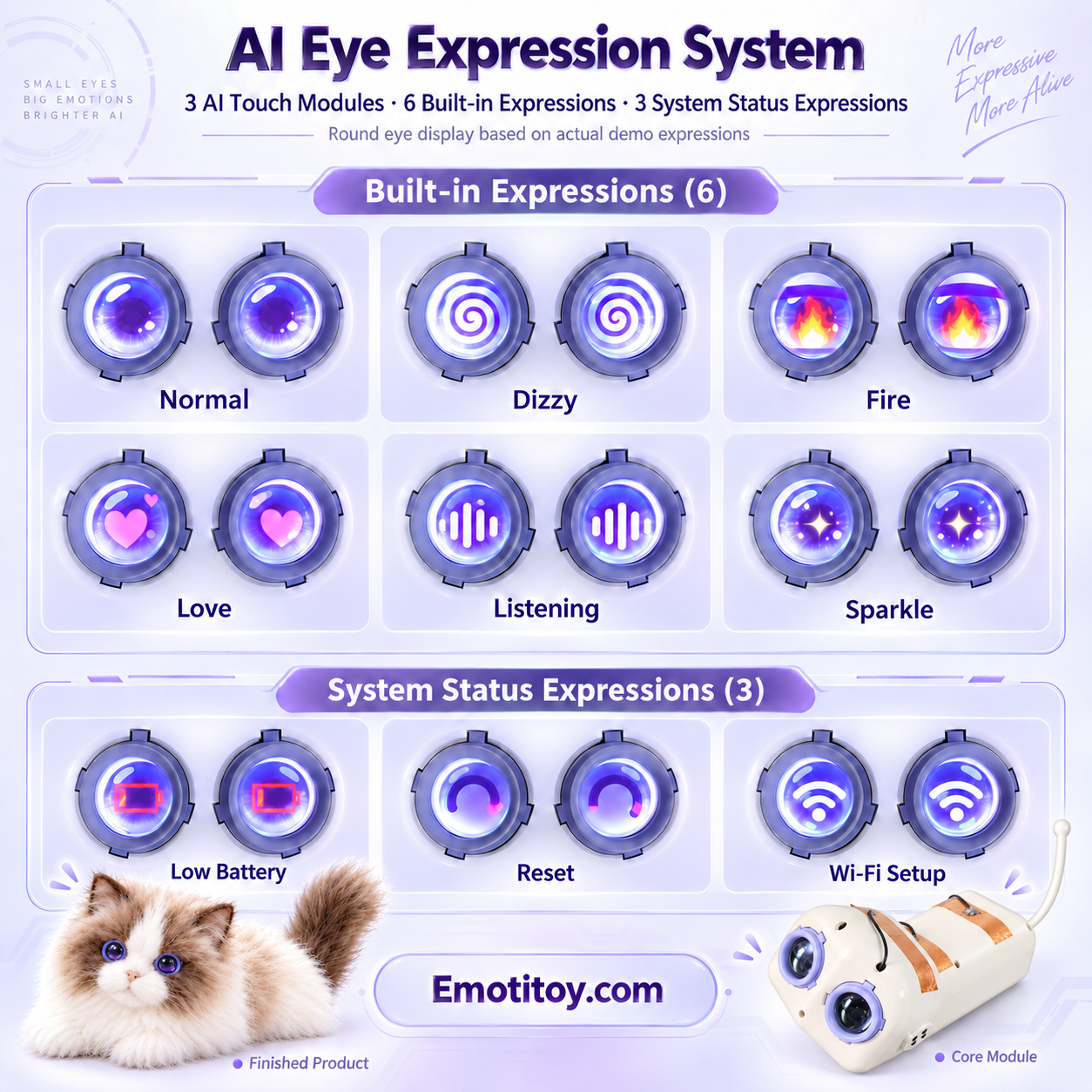
- electronic eyes,
- head or tail movement,
- bedtime stories,
- multilingual interaction,
- or an app for setup and parental controls.
The product experience determines the hardware and software architecture.
2. Define the Character and Physical Form
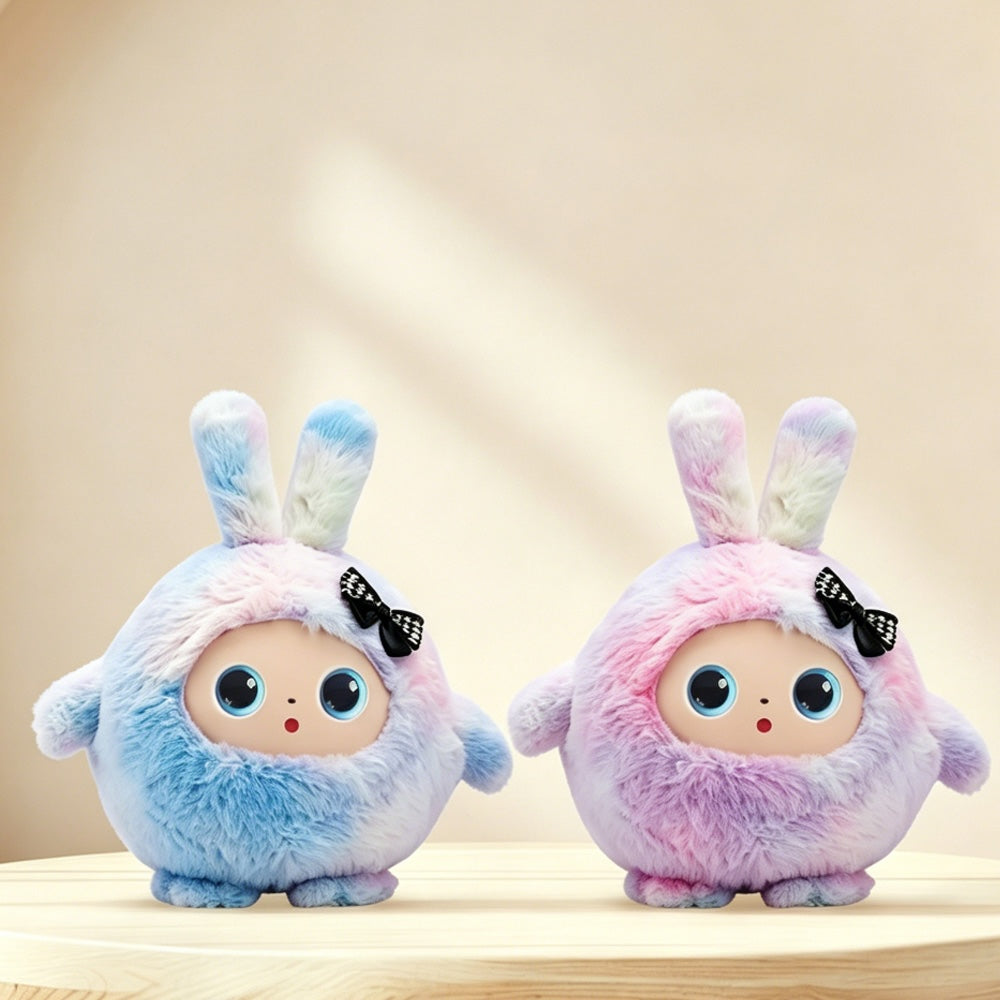
For a plush or character product, appearance affects internal engineering.
The team should confirm:
- overall size,
- head and body proportions,
- face construction,
- eye type,
- fabric and filling,
- internal electronics location,
- battery access,
- speaker position,
- microphone position,
- motion mechanism if any,
- and whether electronics must be removable.
A small change in character proportions can change available PCBA space, speaker cavity size or servo geometry.
3. Choose the Electronics Architecture
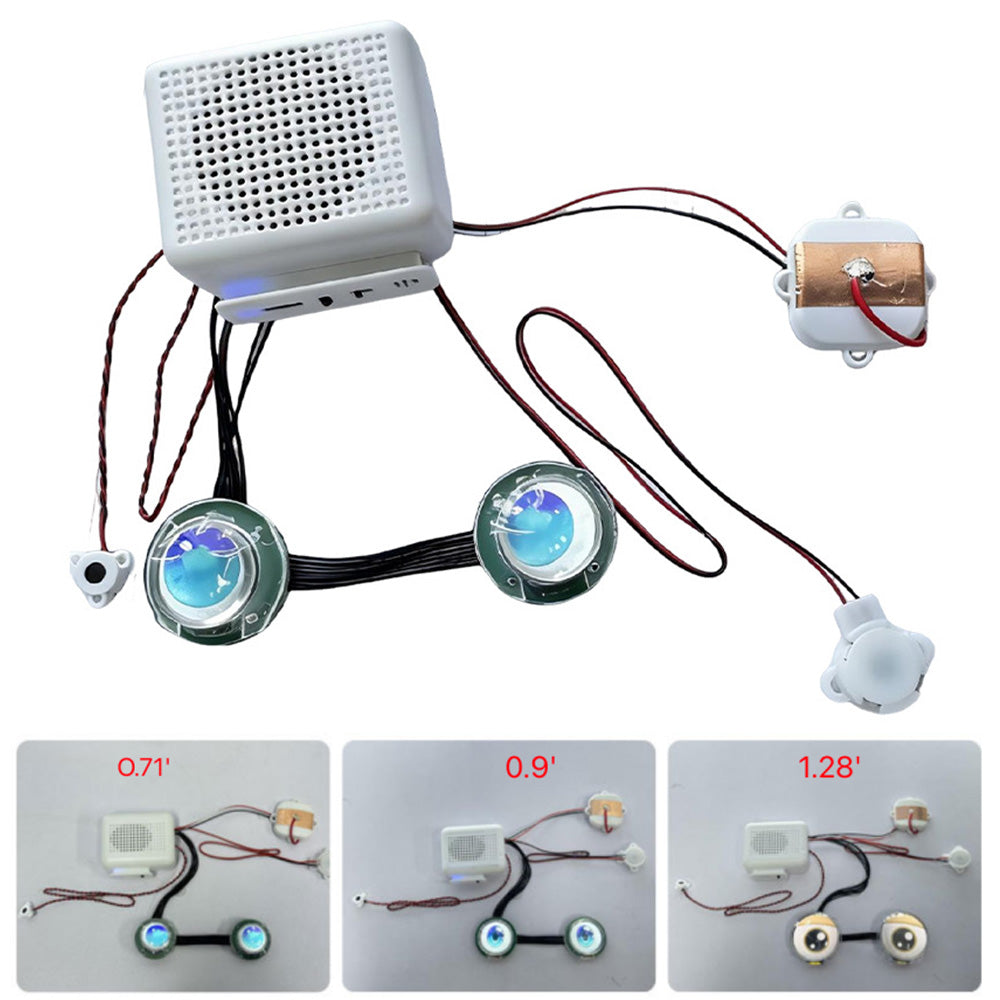
The electronics scope may include:
- Wi-Fi / Bluetooth module,
- PCBA,
- microphone,
- speaker and amplifier,
- battery and charging circuit,
- touch sensors,
- LEDs or electronic eyes,
- motors or servos,
- buttons,
- and production test interfaces.
The goal is not to add every function. It is to create a stable architecture that fits the product and target cost.
4. Select the AI Architecture
A modern AI toy can use several layers:
Voice input → ASR → AI Agent → LLM → TTS → product response
The AI Agent may also contain:
- character identity,
- personality,
- knowledge,
- safety rules,
- language settings,
- memory configuration,
- and device-control logic.
Using a mature platform can reduce the amount of cloud and app infrastructure that must be built from zero.
5. Decide Between Standard App and Branded App
A first prototype or early commercial version may use an existing platform app for pairing and configuration.
A more mature brand may choose an OEM app with:
- brand logo and colors,
- custom onboarding,
- device management,
- voice and language settings,
- AI role management,
- parent controls,
- data controls,
- and regional deployment settings.
The branded-app decision should be made according to the commercial stage, not only because a custom app sounds more premium.
6. Prototype in Layers
A practical development sequence is:
AI demo → functional electronics → physical prototype → integrated engineering sample → production validation
This allows problems to be isolated earlier.
For example, if audio quality is poor, the team can determine whether the problem comes from the microphone, enclosure, software processing or cloud speech service instead of debugging everything at once.
7. Compliance Must Match the Final Product
Platform and module documents are useful, but they do not automatically certify a newly customized toy.
Final-product compliance depends on the actual:
- materials,
- age grading,
- mechanical construction,
- battery,
- radio configuration,
- electronics,
- packaging,
- and target market.
For the US, CPSC toy-safety requirements may apply to children's products. In the EU, toy safety and radio/electrical requirements must be evaluated according to the final product and market-entry timing.
8. Plan for Updates and After-Sales Support
Connected AI products continue to exist after shipment.
The commercial plan should consider:
- firmware OTA,
- AI Agent updates,
- cloud-service policy,
- app maintenance,
- account and data support,
- spare parts,
- and warranty strategy.
A product that can be manufactured but cannot be supported is not a complete commercial solution.
9. Decide What Should Be Custom and What Should Stay Standard
A useful V1 strategy is often:
Custom character + custom fabric/appearance + proven electronics + proven cloud platform + configured AI personality.
This can reduce development risk while still creating a product that feels unique to the brand.
Later versions can add deeper customization such as:
- proprietary app,
- custom PCBA,
- custom motion architecture,
- dedicated backend,
- cellular connectivity,
- or new sensor systems.
What EmotiToy Can Contribute
EmotiToy's AI toy OEM/ODM work is structured around integrating multiple layers rather than treating AI as a separate accessory.
Typical project scope can include:
- character and plush engineering,
- electronic integration,
- AI module / PCBA selection,
- microphone and speaker integration,
- touch and motion systems,
- AI platform integration,
- prototype development,
- production engineering,
- packaging coordination,
- and compliance preparation with the final product configuration.
The objective is to move from an idea to a product architecture that can actually be prototyped, tested and manufactured.
Official Sources
- Tuya AI Toy OEM App Solution
https://developer.tuya.com/en/docs/iot/ai-toys?id=Kel8ydli0zc5y
- CPSC Toy Safety Business Guidance
https://www.cpsc.gov/Business--Manufacturing/Business-Education/Toy-Safety
- EU Toy Safety Regulation 2025/2509
https://eur-lex.europa.eu/eli/reg/2025/2509/oj