AI toys are moving far beyond simple voice modules and cloud-connected chat. For products designed for children, especially those intended for the European market, the development challenge now spans physical toy design, voice AI, character behavior, parental controls, privacy, regional cloud infrastructure, cybersecurity and final-product compliance.
Tuya's public AI Toy and AI Agent documentation in 2026 shows how quickly this product category is becoming a complete system rather than a single electronic feature.
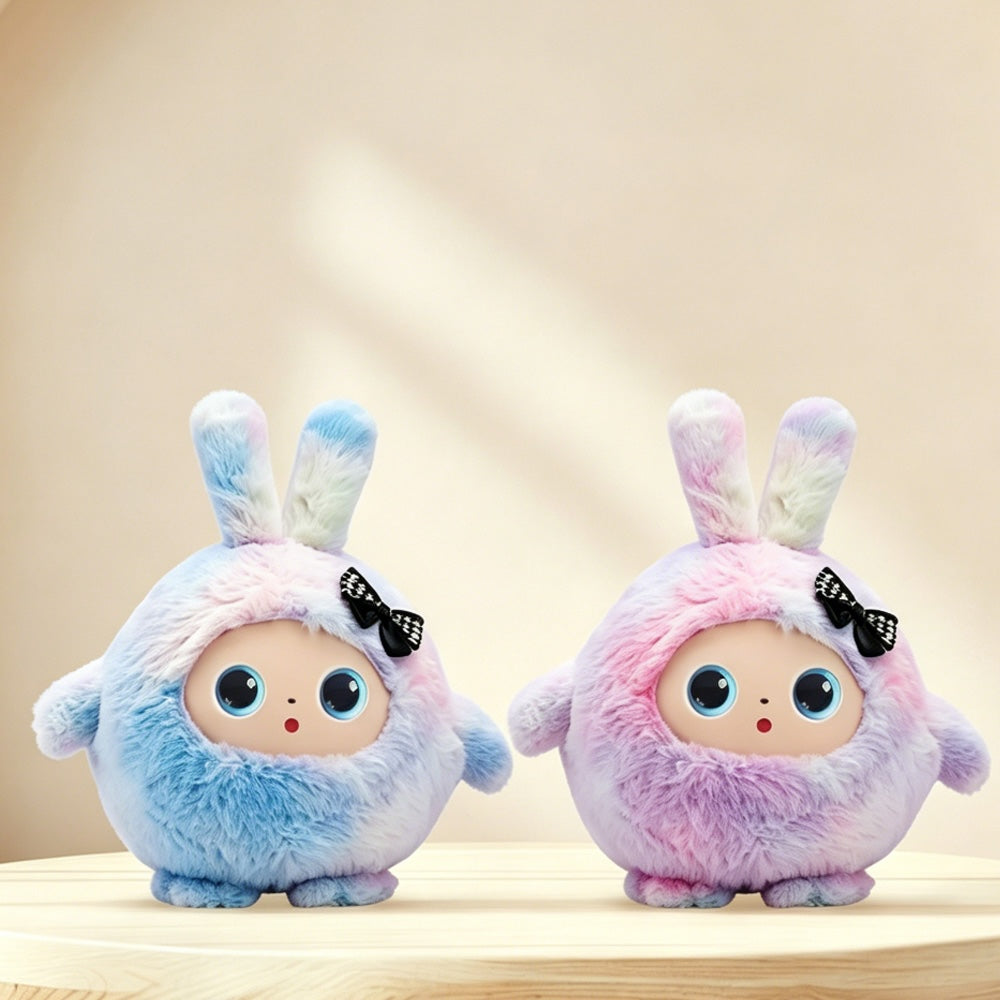
At Spielwarenmesse 2026, Tuya presented an AI Toy Solution covering AI agents, voice interaction, multilingual support, hardware integration and parental management. The direction is clear: a modern AI plush is no longer just a stuffed toy with a microphone connected to a chatbot.
From a Voice Module to a Complete AI Product
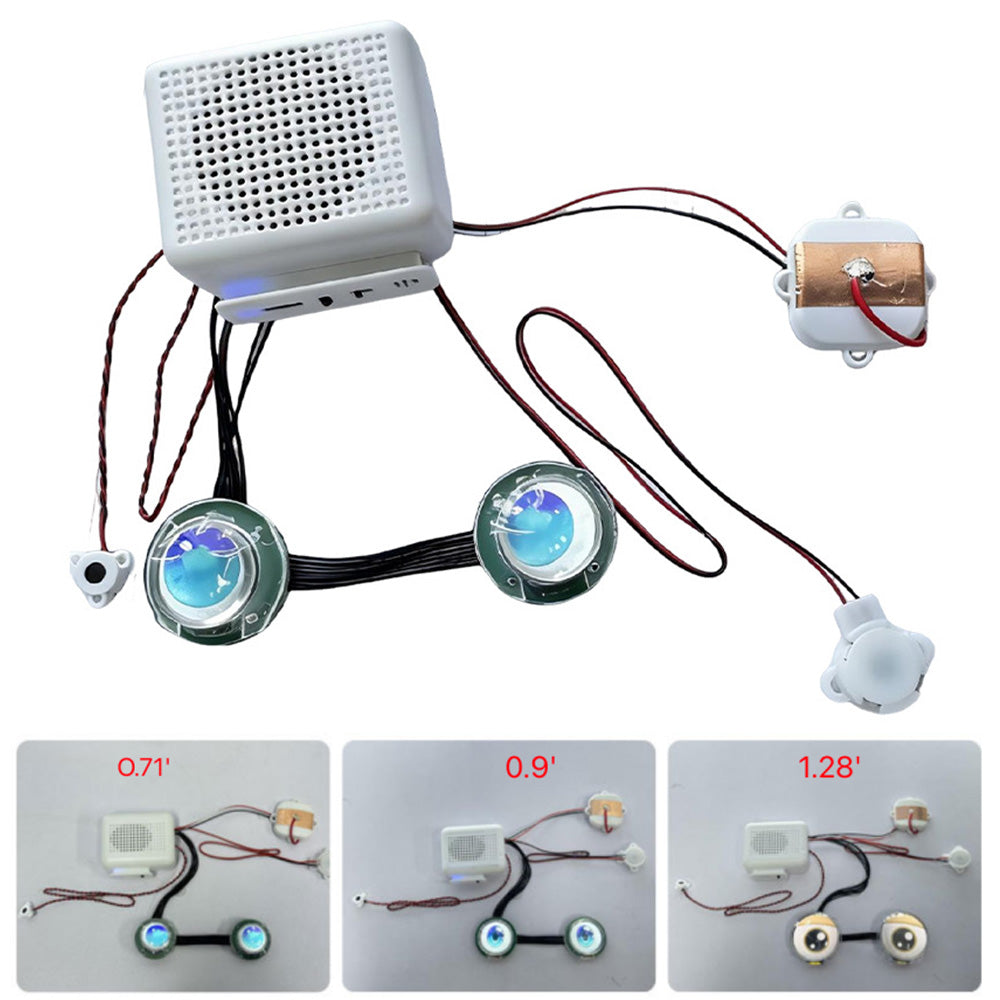
A typical conversational AI toy can be understood as several connected layers:
Child interaction → microphone and physical toy → Wi-Fi/Bluetooth connectivity → AI Agent → language model → voice generation → toy response
The language model is only one part of this architecture.
A production AI toy also needs rules for character identity, voice, language, knowledge, memory, safety behavior, device controls and parent-facing functions. Tuya's AI Agent platform includes role management and variables that can be used to define character information and behavior without rebuilding the entire application every time a brand changes the character.
For branded AI toys, this creates a more useful development framework:
- Character identity
- Personality and backstory
- Voice and language
- Knowledge and approved content
- Conversation rules
- Safety rules
- Device behavior
This is fundamentally different from shipping a generic chatbot inside a toy shell.
Child-Focused AI Needs Its Own Safety Architecture
One of Tuya's most important recent platform developments is its dedicated Child Safety Mode for AI products and agents intended for children.
According to Tuya's developer documentation, a dedicated child AI solution can require the associated AI Agent to operate under child-safety settings rather than standard consumer settings. The platform includes controls related to content safety, AI identity disclosure, personal-information protection, parental controls, chat-history retention and region-specific restrictions.
That leads to a critical engineering principle:
Child safety should be part of the AI architecture from the beginning, not added after the toy has already been completed.
For an OEM/ODM team, this affects far more than the prompt. It influences what the AI may ask, what information may be stored, how long data is retained, which functions are available in different regions and how parents can manage the product.
A Character Can Role-Play Without Pretending to Be Human
AI toys are attractive partly because they can have a name, personality and story. A bear can be curious. A robot can be adventurous. A character can speak in a consistent tone and respond according to its own background.
But child-facing role-play should still preserve transparency.
Tuya's Child Safety Mode includes AI identity disclosure, meaning the assistant can be required to make clear that it is AI rather than a real human being. This creates an important distinction between character design and identity deception.
A well-designed product can still be imaginative and emotionally expressive while keeping the underlying AI identity clear.
Privacy Is a Product-Architecture Question
Connected AI toys may process more information than traditional electronic toys. Depending on the design, this can include voice input, account information, device information, conversation history, role preferences and AI memory.
For that reason, privacy cannot be treated only as a legal document displayed during app registration.
It has to influence technical decisions such as:
- What information is collected?
- Why is it needed?
- Is it stored?
- For how long?
- Who can access it?
- Can parents delete it?
- Which data center is used?
Tuya's Child Safety Mode documentation specifically addresses personally identifiable information such as a child's name, address, school and phone number, together with controls around conversation retention and deletion.
This is especially important because AI systems are designed to encourage natural conversation. The more natural the interaction becomes, the more important it is to decide what the system should intentionally avoid remembering.
Memory and Chat History Are Not the Same Thing
Modern AI platforms can support long-term memory. Tuya's general AI Agent documentation includes configurable memory rules that can extract and recall selected information across interactions.
That does not mean a child-oriented AI toy should store everything a child says.
A safer product architecture separates several concepts:
Current conversation context helps the AI understand the immediate dialogue.
Chat history is a record of previous conversations.
Long-term memory stores selected information for future personalization.
For child-focused products, each layer may need tighter controls, shorter retention periods and clear deletion mechanisms.
This distinction is useful for both manufacturers and brands because it prevents a common misunderstanding: "long-term memory" should not automatically mean "permanent recording of a child's conversations."
Parents Need More Than a Pairing App
In first-generation smart toys, a mobile app often existed only to connect the device to Wi-Fi.
AI toys require a broader parent layer.
Tuya's AI Toy solution and panel templates show how a parent-facing interface can include functions such as device binding, battery level, volume, agent selection, voice settings, chat functions and history-related controls. Child-safety functions can add data deletion, parental verification and safety-related settings.
A practical parent layer may therefore include:
- Device setup and binding
- Battery and connection status
- Volume control
- Language settings
- Character or AI Agent selection
- Voice selection
- Interaction-history management
- Data deletion
- Usage controls
- Safety-related settings
For OEM/ODM projects, this also creates an important commercial choice: use an existing ecosystem app, or launch a branded OEM app with the brand's own user experience and privacy responsibilities.
European Deployment Is Also a Cloud Question
Tuya publicly lists multiple regional data centers. Its developer documentation identifies a Central Europe Data Center in Frankfurt, Germany, and a Western Europe Data Center in Eemshaven, Netherlands.
Tuya also publishes OEM App data-center mapping rules that assign accounts to regions according to account location and app configuration.
For brands planning European AI products, this matters because cloud architecture is no longer separate from product planning.
However, one distinction is essential:
A platform offering a European regional data center is not the same as confirming that every finished product stores all of its data in that exact location.
The final deployment depends on the selected app, account mapping and platform configuration. Responsible product communication should always make that difference clear.
AI Toys Are Becoming Software Products as Well as Physical Products
Traditional toy development focuses on appearance, fabrics, mechanical construction, electronics, battery safety and manufacturing quality. Those requirements still remain.
AI toys add a software layer that can continue to evolve after the physical design is complete.
Roles, knowledge, models, voice settings, memory rules and other agent behavior can be configured separately from the plush body and electronics. This means the development process increasingly requires cooperation between:
- Plush and industrial designers
- Electronics engineers
- Firmware teams
- AI Agent teams
- Cloud and app platforms
- Quality and compliance teams
The finished experience is created by the interaction of all of these layers.
Platform Compliance Does Not Replace Finished-Product Compliance
Mature AI and IoT platforms can provide important security, privacy and infrastructure capabilities. They can reduce the amount of cloud and software infrastructure a toy brand needs to build from zero.
But platform documentation or module certifications do not automatically certify the finished customized toy.
The final product still needs to be assessed according to its actual materials, mechanical structure, battery, PCB, wireless configuration, firmware, target age, packaging and intended market.
That distinction is particularly important when an existing AI module is integrated into a newly designed plush product.
The Next Generation of AI Toys Will Be System Products
The direction of the market is becoming increasingly clear.
A modern AI toy is not only a plush character, a PCB or a language model. It is a system created from the interaction of:
Physical design + electronics + connectivity + AI Agent + voice + parent management + privacy + cloud infrastructure + security + compliance.
For brands entering the European market, the strongest product strategy is therefore not to ask only which model the toy will use.
The better starting point is to design the physical toy, AI behavior and digital infrastructure as one integrated product from the beginning.
At EmotiToy, this is the engineering direction we see for next-generation AI toy OEM/ODM development: combining traditional toy manufacturing with embedded electronics and platform-level AI integration so that products can move more efficiently from concept to prototype and commercial production.
Official Sources
- Tuya Smart Powers the Next Wave of AI Toys at Spielwarenmesse 2026
https://www.tuya.com/news-details/tuya-smart-powers-the-next-wave-of-ai-toys-at-spielwarenmesse-2026-Kfbm3ygwbpeen
- Tuya Child Safety Mode
https://developer.tuya.com/en/docs/iot/security_compliance?id=Kfezdig2xq0x9
- Tuya AI Agent Role Management
https://developer.tuya.com/en/docs/iot/agent_role?id=Kegdz5zoi8f2q
- Tuya Long-Term Memory
https://developer.tuya.com/en/docs/iot/long_memory?id=Kfjxs3331kgzk
- Tuya Data Center Introduction
https://developer.tuya.com/en/docs/iot/DataCenterIntroduction?id=Kav2hlac2ppnw
- Tuya OEM App Data Center Mapping
https://developer.tuya.com/en/docs/iot/oem-app-data-center-distributed?id=Kafi0ku9l07qb