When people discuss AI toys, one question appears again and again:
Which large language model does the toy use?
It is an understandable question, but it does not describe the complete product.
A language model can generate text. A commercial AI toy needs much more than text generation. It needs a character, voice, rules, knowledge, memory strategy, device controls, safety settings and a way to connect all of those capabilities to the physical product.
That is where the AI Agent becomes more important than the model name alone.
The LLM Is the Language Engine
A large language model, or LLM, is the core model that can interpret language and generate a response.
Depending on the platform, an AI product may connect to different model providers. Tuya's public AI hardware and AI Agent documentation shows support for connecting AI experiences to different mainstream model services.
The model can help with tasks such as:
- Understanding natural-language requests
- Generating answers
- Creating stories
- Explaining concepts
- Maintaining conversational context
But the model by itself does not automatically know how a specific toy should behave.
It does not automatically know the character's name, brand story, allowed topics, preferred speaking style, parent rules or product functions.
Those are product-level decisions.
The AI Agent Is the Product Behavior Layer
An AI Agent sits between the user experience and the underlying model.
In Tuya's AI Agent platform, an agent can combine multiple components, including role settings, prompts, variables, knowledge, memory, tools, device functions and debugging or evaluation capabilities.
For an AI toy, the agent can define:
- Who the character is
- How it speaks
- What it knows
- What it should avoid
- Which voice it uses
- Which language it uses
- What information may be remembered
- Which device functions it can trigger
- Which safety rules apply
This makes the agent much closer to the actual product personality.
One Model Can Power Many Different Characters
Two AI toys can use the same underlying language model and still feel completely different.
One character might be a gentle bedtime storyteller.
Another might be an energetic learning companion.
A third might be a fantasy animal with a detailed fictional world.
The difference can come from the agent layer rather than the LLM itself.
Tuya's Role Management documentation allows developers to create role profiles with information such as personality, background, interests, knowledge and other character attributes.
This makes it possible to separate the underlying AI model from the consumer-facing character.
That separation is valuable for brands because it provides more control over the user experience.
Role Management Helps Build Consistent Characters
A generic chatbot often changes tone depending on the user's question.
A branded AI toy usually needs more consistency.
The character may need to remain recognizable across thousands of conversations.
Role configuration can help define elements such as:
Name — the character's identity.
Personality — friendly, calm, adventurous, curious or other traits.
Backstory — the fictional context that makes the character distinctive.
Interests — the topics the character naturally talks about.
Speaking style — the tone and language used during conversation.
Knowledge boundaries — what the character should know or emphasize.
For a physical AI product, consistency matters because the customer is not buying access to a generic model. The customer is buying a character experience.
Variables Make the Agent More Flexible
Tuya also documents AI Agent variables that can be used to make agent behavior more dynamic.
Variables can help separate reusable system logic from product-specific information.
For example, a product family may share the same general AI architecture while using different character names, voices, languages or role data.
Instead of creating a completely separate AI system for every SKU, a manufacturer can use a common architecture and configure product-level differences through variables and role settings.
This can reduce development complexity when a brand plans multiple characters or localized versions.
Knowledge Is Different From Model Knowledge
A general-purpose model has broad background knowledge, but a branded toy may need its own controlled information.
Examples include:
- Character stories
- Brand-approved educational content
- Product instructions
- Proprietary fictional worlds
- Parent-approved question-and-answer content
An AI Agent platform can connect private or curated knowledge to the agent so that the toy is not relying only on the model's general knowledge.
This is especially important when consistency matters more than maximum openness.
A children's educational character, for example, may need a carefully selected knowledge base rather than unrestricted answers on every possible topic.
Memory Is Another Separate Layer
The language model, the agent and memory are also separate concepts.
The current conversation can provide short-term context.
Long-term memory can store selected information for future interactions.
Tuya's long-memory documentation shows that agent systems can extract and recall selected information according to configurable rules.
For an AI toy, memory could support personalization, but it also creates privacy and child-safety questions.
The correct question is therefore not only:
Can the toy remember?
It is also:
What should the toy remember, for how long, and under which rules?
This is particularly important for child-focused products, where the safest memory configuration may be more restrictive than the platform's general technical capability.
Voice Is Part of the Character
An AI toy is usually a voice product rather than a text product.
That means the character experience also depends on speech recognition and text-to-speech.
The same AI Agent can feel very different depending on:
- Voice choice
- Speaking speed
- Language
- Pronunciation
- Emotional style
- Response length
For multilingual products, the voice pipeline must work end to end. The system needs to understand the user's speech and generate a natural spoken response in the target language.
This is why "the model supports a language" is not always the same as "the complete toy supports natural voice interaction in that language."
Device Control Connects AI to the Physical Toy
The most important difference between an AI website and an AI toy is the physical device.
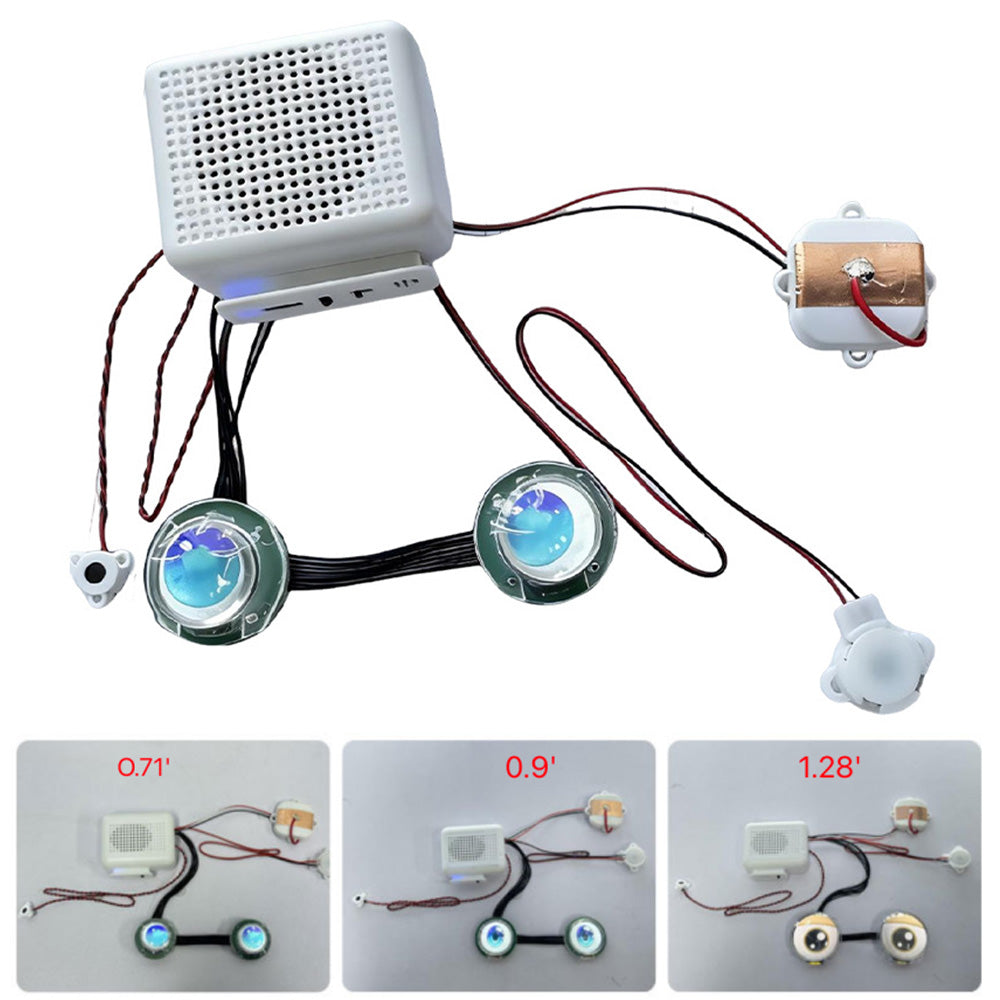
An agent may eventually need to interact with hardware functions such as:
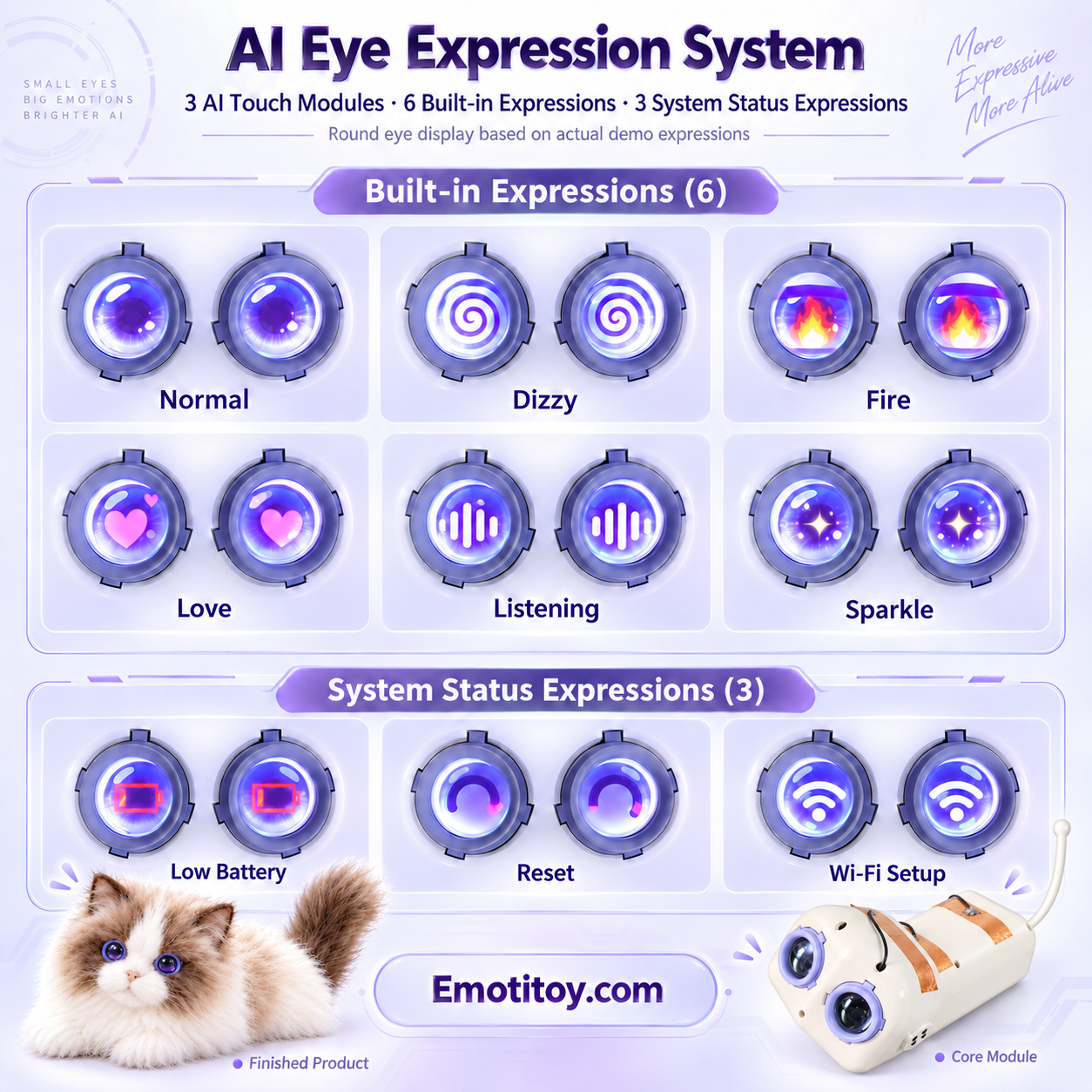
- LEDs or electronic eyes
- Servos or movement
- Touch sensors
- Buttons
- Volume
- Sound effects
- Other device states
The AI layer therefore needs a way to connect language understanding to physical behavior.
That is one reason the agent architecture is more useful than thinking only in terms of a chatbot API.
The product must coordinate AI conversation with actual device functions.
Safety Rules Sit Above Normal Character Behavior
For child-oriented products, safety rules need a higher priority than entertainment or character prompts.
Tuya's Child Safety Mode provides an example of this architecture. System-level child-safety requirements can take priority over lower-level role instructions.
That means a product can still have a strong personality while keeping safety constraints in place.
For manufacturers, this is an important design rule:
Do not put all behavior into one giant prompt.
A stronger architecture separates safety, role, knowledge, memory and device behavior into manageable layers.
Why This Matters for OEM/ODM Development
When a brand asks for an AI plush or AI companion, the model name should be only one part of the engineering discussion.
A more complete product-definition process should answer questions such as:
- Which AI model or model family will be used?
- What is the character role?
- What knowledge should the character have?
- Which language and voice are required?
- What memory rules apply?
- Which child-safety or content rules apply?
- Which physical device functions can the agent control?
- How will the agent be tested before production?
Once these questions are answered, the AI toy becomes a structured product rather than a generic model connected to a speaker.
The Better Question to Ask
Instead of asking only:
"Which LLM powers the toy?"
A better question is:
"How is the AI Agent designed around the character, hardware and intended user?"
That is where the actual product differentiation happens.
At EmotiToy, we see AI toy development moving toward this layered architecture: the model provides language capability, while the agent defines how that capability becomes a branded physical product.
Official Sources
- Tuya AI Agent Management
https://developer.tuya.com/en/docs/iot/ai-agent-management?id=Kdxr4v7uv4fud
- Tuya AI Agent Role Management
https://developer.tuya.com/en/docs/iot/agent_role?id=Kegdz5zoi8f2q
- Tuya AI Agent Variables
https://developer.tuya.com/en/docs/iot/agent-variable?id=Kegaaiqwlwpws
- Tuya Long-Term Memory
https://developer.tuya.com/en/docs/iot/long_memory?id=Kfjxs3331kgzk