A connected plush toy has two very different material systems inside one product:
soft textile parts that users want to clean and electronics that must stay protected from water and mechanical damage.
If washability is important, this should be designed into the product from the beginning rather than solved with a warning label after the prototype is finished.
Start with the Cleaning Strategy
The first question is not “Can the whole toy be washed?”
The better question is:
Which parts need to be washable, and how will the electronics be removed or protected?
Common strategies include:
- removable electronics module,
- removable battery/electronics box,
- washable outer plush skin,
- localized hand-clean instructions,
- or a non-washable product with clearly defined surface-cleaning requirements.
The correct strategy depends on the product, age group, fabric, mechanical system and electronics.
Removable Electronics Can Simplify the Product Lifecycle
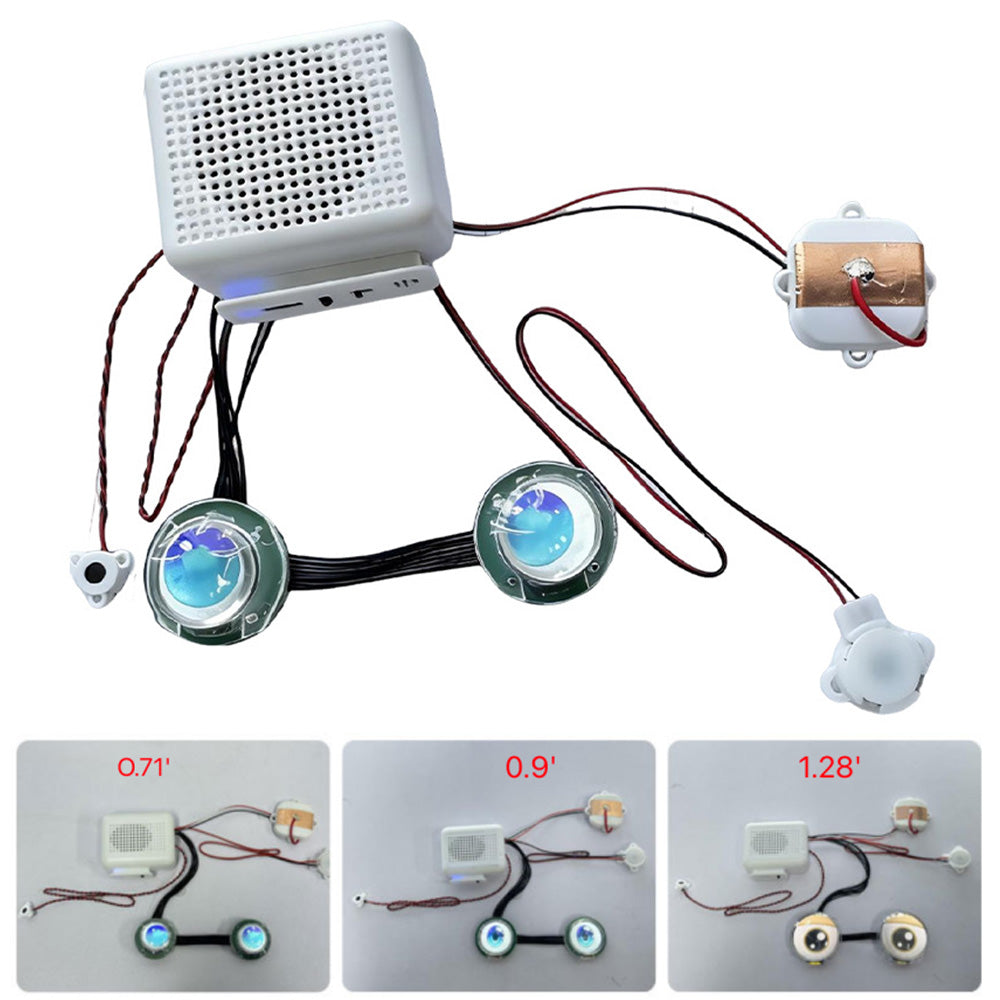
A removable electronics module can provide several advantages:
- the textile body can be cleaned separately,
- electronics can be serviced or replaced,
- battery access can be simplified,
- firmware or repair work is easier,
- and the same electronics platform may be reused across multiple character designs.
But removability also creates engineering challenges.
The module needs a secure location that users can access when intended but that does not move around during normal play.
The Access Opening Is Part of the Safety Design
A zipper, hook-and-loop flap or internal pouch may appear to be only a sewing detail, but it affects the whole product.
The team should consider:
- whether a child can access the battery,
- whether fasteners create small-part risks,
- whether cables can be pulled,
- whether the module can be reinstalled incorrectly,
- whether the opening remains secure after repeated use,
- and how the cleaning instructions explain removal and reinstallation.
The final access design must match the target age and applicable product-safety requirements.
Speaker and Microphone Placement Become More Difficult
If the electronics module is removable, the acoustic path must still work consistently.
The design may need to align:
- speaker outlet with a fabric area,
- microphone opening with a stable location,
- internal padding around the module,
- and cable or connector positions.
A user should not be able to reinstall the module in a way that blocks the microphone or turns the speaker inward.
Motion Systems Need Additional Planning
A simple removable AI box is easier than a product with servos distributed through the head, arms or tail.
For moving plush products, the team must decide whether:
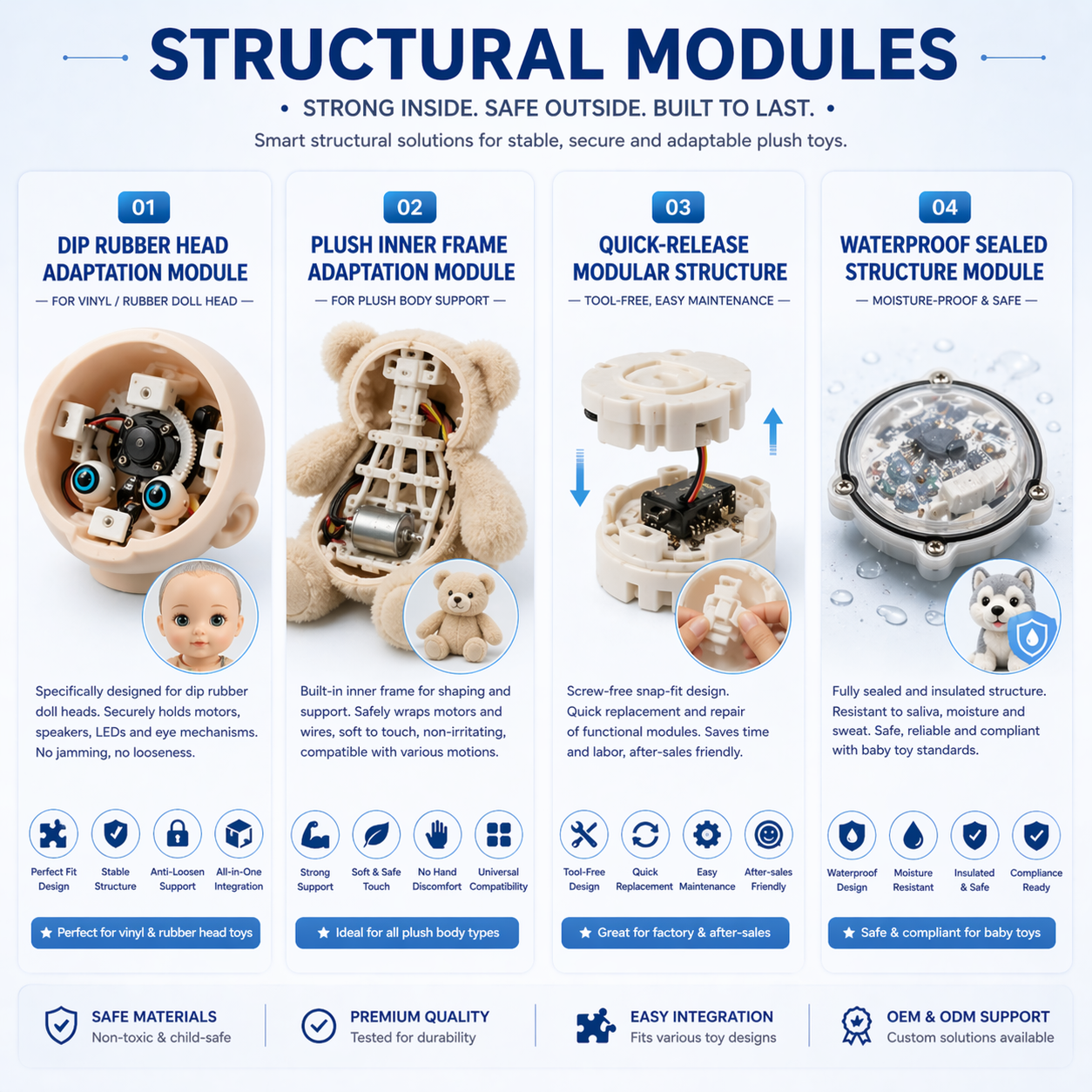
- the motion mechanism stays permanently inside,
- the entire inner frame is removable,
- only the battery/control module is removable,
- or the product is surface-clean only.
Mechanical linkages and servo wiring make full washability much harder.
This is why washability and movement architecture should be decided together.
Battery Access Is Not the Same as User Replacement
A rechargeable product may provide service access to the battery without making the battery user-replaceable.
These are different product decisions.
The team should define:
- who is expected to access the battery,
- how charging occurs,
- whether the electronics module is removed for charging,
- how connectors are protected,
- and what instructions are provided to the user.
Serviceability Can Reduce Full-Product Replacement
Connected toys have more failure modes than passive plush products.
Possible service issues include:
- battery degradation,
- damaged charging port,
- speaker failure,
- PCBA failure,
- loose connection,
- or firmware recovery.
A serviceable electronics module can allow repair or replacement without discarding the entire plush body.
This can also simplify after-sales spare-parts planning.
Modular Electronics Can Support Multiple Characters
A standardized internal module can be used across different plush designs if the team controls:
- internal pocket dimensions,
- speaker/microphone orientation,
- antenna clearance,
- charging access,
- and sensor interfaces.
This can reduce repeated electronics development when a brand wants a family of characters.
However, the acoustic and RF performance should still be tested in each final body because different shapes and materials can affect performance.
Cleaning Instructions Must Match the Actual Construction
Marketing should never describe a product as “washable” unless the exact cleaning method has been defined and validated for the final materials and construction.
The final manual may need to explain:
- how to power off the device,
- how to remove the electronics if designed for removal,
- which parts may be washed,
- whether hand washing or machine washing is permitted,
- drying requirements,
- and how to reinstall the module safely.
Final Compliance Is Product-Specific
EU and US toy-safety frameworks evaluate the finished product, including mechanical and electrical characteristics relevant to the intended user.
A removable electronics concept therefore needs to be included in the final product assessment rather than treated as an accessory outside the toy.
Design for Real Maintenance, Not Only Prototype Appearance
For AI plush products intended for long-term use, cleaning and serviceability can become part of the product value.
At EmotiToy, we recommend discussing washability, removable electronics and battery access during the structural design phase, before the plush pattern and electronics enclosure are frozen.
Official Sources
- EU Toy Safety Regulation 2025/2509
https://eur-lex.europa.eu/eli/reg/2025/2509/oj
- CPSC Toy Safety Business Guidance
https://www.cpsc.gov/Business--Manufacturing/Business-Education/Toy-Safety
- Tuya Security Trust Center
https://www.tuya.com/trustcenter/security