For a conversational AI toy, the voice is not a cosmetic detail. It is part of the character, the usability and the perceived quality of the product.
A technically capable AI toy can still feel wrong if the voice sounds too formal, too fast, too mature for the target character, or inconsistent across languages. That is why voice selection should be treated as a product-design decision rather than a final audio setting.
Voice AI Is a Pipeline
A voice-first AI toy typically depends on several layers:
Microphone → speech recognition → AI Agent / model → text-to-speech → speaker
The text-to-speech layer determines how the final answer sounds, but the overall experience also depends on whether speech recognition handles the user's language correctly and whether the AI Agent is configured for the intended character.
Tuya's AI Agent language documentation separates speech recognition and speech synthesis support, which is an important reminder that a product does not truly support a spoken language unless both understanding and spoken output are available in the selected configuration.
A Voice Should Match the Character
A toy character may need a voice that is:
- warm and calm,
- energetic and playful,
- gentle for bedtime use,
- clear and neutral for educational use,
- slower for younger users or older adults,
- or more expressive for a robotic pet or fantasy character.
The best voice is not necessarily the most realistic one. A strong product voice is the one that remains clear, comfortable and consistent with the character design.
Language Support Is More Than Translation
A multilingual AI toy should be evaluated across the full speech pipeline.
Teams should check:
- speech recognition quality in each target language,
- pronunciation of names and product-specific vocabulary,
- speaking speed,
- natural pauses,
- accent suitability,
- number and quality of available voices,
- and whether the same character identity feels consistent across languages.
For example, a product may have strong English speech output but require additional evaluation for French, Arabic, Japanese or Spanish pronunciation.
Speaking Style Can Be Part of the Agent
Modern realtime AI platforms can combine voice output with agent-level instructions. This means the product can define not only what the character says, but also how it should generally communicate.
Useful design variables may include:
- concise versus detailed answers,
- formal versus playful wording,
- speaking speed,
- emotional tone,
- age-appropriate vocabulary,
- and interaction length.
The voice engine and the agent instructions should therefore be tested together.
Do Not Treat Every Available Voice Feature as Automatically Suitable
A general AI platform may expose many audio capabilities. A child-focused toy, an educational device and a senior companion may require different restrictions and review.
Product teams should decide which voice options are appropriate for the target market and should avoid presenting platform-wide audio capabilities as if every one of them is enabled in the finished product.
What OEM/ODM Teams Should Confirm Before Prototype Freeze
Before finalizing the voice experience, confirm:
- Which languages are required?
- Which ASR and TTS services support them?
- Which voice is the default character voice?
- Is the voice fixed or parent-selectable?
- What speaking speed is appropriate?
- Does pronunciation remain acceptable across product names and custom vocabulary?
- Does the voice remain consistent after firmware, agent or cloud updates?
- Are any voice features restricted by the target market or product age group?
Voice Should Be Tested on the Real Hardware
A voice that sounds good through headphones may sound very different through a small toy speaker inside plush material.
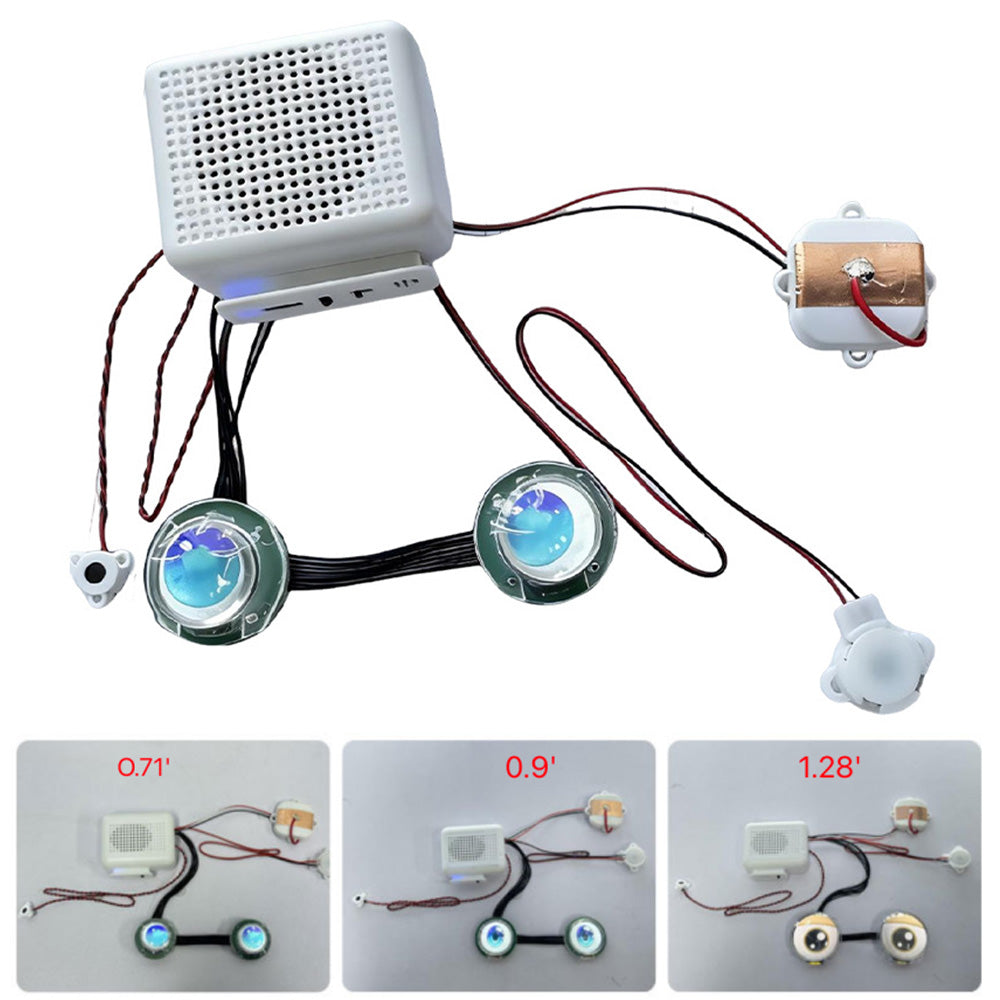
Final evaluation should therefore include the actual microphone, speaker, enclosure, fabric and acoustic structure. Speaker position, stuffing density, microphone placement and mechanical noise can all affect the user experience.
At EmotiToy, we treat voice selection as part of the complete product architecture: AI Agent + language + TTS + speaker + microphone + physical structure.
Official Sources
- Tuya AI Agent Language Support
https://developer.tuya.com/en/docs/iot/agent-lang?id=Kekg6becm9z6g
- OpenAI Realtime API
https://platform.openai.com/docs/api-reference/realtime
- Google Gemini Live API
https://ai.google.dev/gemini-api/docs/live-api