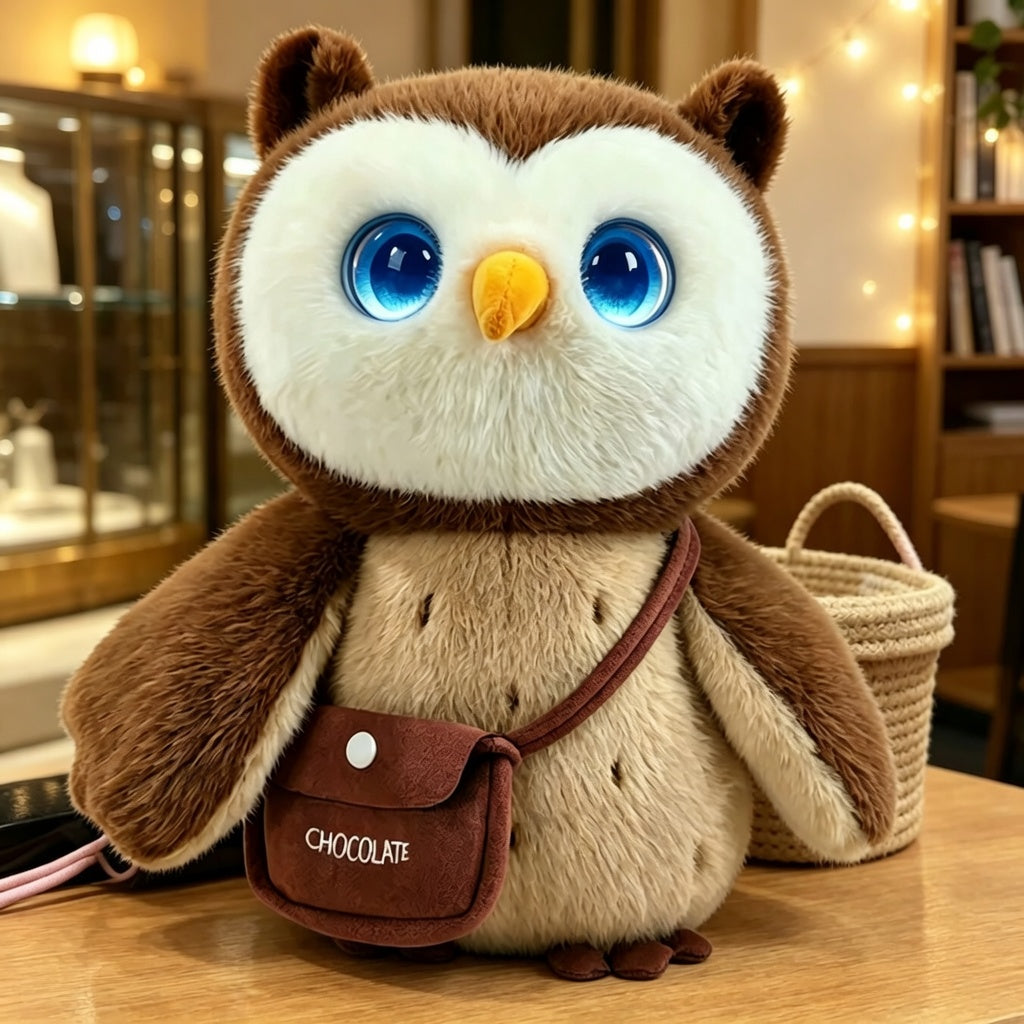
A general-purpose language model can answer a very wide range of questions, but that does not automatically make it the best knowledge source for a branded learning toy.
Educational products often need a more controlled approach: approved source material, a defined character, clear boundaries and predictable teaching goals.
This is where AI Agent + curated knowledge becomes more useful than simply connecting a toy to a generic chatbot.
Start with the Learning Objective
Before building a knowledge base, define what the product is supposed to teach.
Examples include:
- vocabulary,
- language learning,
- science facts,
- history,
- stories,
- cultural traditions,
- geography,
- reading practice,
- or faith-based learning material.
A product designed for structured learning should not rely on the model to invent the curriculum during conversation.
Separate the AI Model from the Approved Knowledge
A useful architecture is:
User question → AI Agent → approved knowledge retrieval → model response → TTS
The large language model provides natural-language reasoning and conversation, while the curated knowledge source provides the approved factual material.
Modern AI platforms can support retrieval from uploaded or managed knowledge sources. Tuya's AI Agent platform includes knowledge and role-management concepts, while OpenAI provides file-search/vector-store capabilities that can be used to retrieve information from approved documents.
Character Rules Still Matter
The same educational knowledge can be delivered through different characters.
A brand can define:
- personality,
- tone,
- age-appropriate vocabulary,
- response length,
- preferred teaching style,
- and topics the character should avoid.
This allows an educational teddy bear, robot, animal or desktop device to share the same reviewed knowledge while presenting it in a character-specific way.
Cultural and Faith-Based Learning Needs Human Review
Products that teach cultural or faith-based material require additional care.
Examples may include:
- Quran learning and Arabic recitation support,
- Bible learning and story-based education,
- cultural-history content,
- traditional stories,
- or community-specific educational material.
In these cases, the AI should not be positioned as a religious authority or as a replacement for teachers, parents or qualified community leaders.
A stronger product model is:
reviewed source material + controlled AI presentation + transparent boundaries.
Build the Knowledge Base from Approved Sources
The product team should decide:
- Which documents or source materials are authoritative for this product?
- Who reviews them?
- How are updates approved?
- Can the AI answer outside the approved knowledge domain?
- What should happen when the answer is not found?
- Which languages are supported?
- How are quotations, translations and terminology controlled?
For educational content, “I don't know” can be better than a confident but unsupported answer.
Retrieval Can Reduce Hallucination Risk but Does Not Eliminate It
Connecting an AI model to a reviewed knowledge base can improve grounding, but the product still needs testing.
Teams should test:
- whether the correct source is retrieved,
- whether the AI changes the meaning,
- whether names and terminology are pronounced correctly,
- whether answers stay within the approved scope,
- and whether unsupported questions are handled safely.
A retrieval system is a product component, not a guarantee of perfect accuracy.
Version Control Matters
Educational content changes over time.
A commercial product should track:
- source version,
- upload date,
- reviewer,
- language version,
- approved changes,
- and the AI Agent version associated with the content.
This is especially important when the same product is sold across multiple regions or languages.
Multilingual Learning Adds Another Layer
If the toy supports multiple languages, the team should evaluate both:
- the language of the knowledge source,
- and the language of the final spoken answer.
A translated knowledge base may not be equivalent to asking a model to translate on the fly.
For sensitive educational terminology, reviewed translations may be preferable.
A Good Educational AI Toy Has Clear Boundaries
A useful learning product can say:
- what it is designed to teach,
- where its knowledge comes from,
- what age group it targets,
- and what it does when a question falls outside its approved scope.
This creates a more trustworthy product than claiming the toy “knows everything.”
OEM/ODM Implications
From a manufacturing perspective, knowledge architecture affects more than software.
The project may need:
- a language plan,
- a parent or setup app,
- content-update workflow,
- cloud connection,
- offline fallback behavior,
- storage for local audio or prompts,
- and a process for testing each release.
At EmotiToy, we see curated-knowledge products as a strong category for educational brands because they combine a custom physical character with controlled digital content rather than relying only on generic AI behavior.
Official Sources
- Tuya AI Agent Management
https://developer.tuya.com/en/docs/iot/ai-agent-management?id=Kdxr4v7uv4fud
- Tuya AI Agent Role Management
https://developer.tuya.com/en/docs/iot/agent_role?id=Kegdz5zoi8f2q
- OpenAI Vector Store / File Search Reference
https://platform.openai.com/docs/api-reference/vector-stores-files