
ESP32-S3 is frequently considered in voice-enabled toy and smart-device projects because it combines wireless connectivity, embedded processing and a mature development ecosystem.
But an important distinction should be made from the beginning:
ESP32-S3 does not automatically mean a fully offline conversational AI toy.
Its strongest role in many AI toy architectures is as an embedded device platform that handles local audio, connectivity, sensors and selected offline voice functions while connecting to a cloud AI service for richer conversation.
A Useful Hybrid Architecture
A typical ESP32-S3 voice-product architecture can look like this:
Microphone
↓
Audio front end
↓
Wake word / local commands
↓
Wi-Fi connection
↓
Cloud AI Agent / LLM
↓
Audio response
↓
Speaker
This division gives the embedded processor responsibility for immediate device functions while cloud infrastructure handles larger generative-AI workloads.
ESP-SR Provides Local Voice Building Blocks
Espressif's official ESP-SR framework supports ESP32 and ESP32-S3 voice applications.
Its published modules include:
- Audio Front-End (AFE),
- WakeNet wake-word engine,
- MultiNet speech-command recognition,
- and speech synthesis with platform-specific language limitations.
These components are useful for products that need an offline wake word or a small set of local commands.
For example, a toy could recognize a wake phrase locally before opening the cloud conversation path.
Why Local Wake Word Matters
Without a local wake mechanism, a product may need another way to decide when the user wants to start interaction, such as a button or touch sensor.
A local wake word can create a more natural hands-free experience.
It can also reduce unnecessary cloud traffic because the device does not need to treat every background sound as a cloud request.
For a child companion or desk robot, this can make the product feel more responsive while preserving a clear interaction boundary.
Audio Front-End Processing Can Improve Speech Quality
The physical environment inside a toy is acoustically difficult.
The microphone may sit close to:
- the speaker,
- a battery,
- plastic housing,
- motors,
- and plush material.
Espressif's Audio Front-End framework publicly describes functions such as acoustic echo cancellation, noise suppression, voice activity detection and wake-word processing.
These functions illustrate why the audio path should be engineered as a system rather than treating the microphone as a simple accessory.
Cloud LLMs Handle the Open-Ended Conversation
Local command recognition works well for a defined command set.
It is not the same as open-ended conversation.
If a user asks:
- “Tell me a story about a moon rabbit,”
- “Why is the sky blue?”
- “Can we practice French?”
- or “What did we talk about yesterday?”
a cloud AI Agent or language model is usually the layer that handles the flexible response.
The ESP32-S3 device can act as the embedded endpoint that captures input, manages the connection and plays the response.
ESP-VoCat Shows a Reference Voice Architecture
Espressif's ESP-VoCat development kit is specifically positioned for voice-interaction product development.
Its public documentation makes it useful as a reference when thinking about:
- ESP32-S3 voice hardware,
- microphones,
- speaker interaction,
- offline wake functions,
- and cloud large-model integration.
A development kit is not a finished toy design, but it can help engineering teams evaluate the architecture before a custom PCBA is created.
Sensors and Physical Controls Still Matter
An AI toy should not depend on voice for every function.
ESP32-S3-based products can also integrate device inputs such as:
- buttons,
- touch sensors,
- motion sensors,
- LEDs,
- displays,
- or motor-control interfaces.
This makes it possible to combine voice AI with physical interaction.
For example:
touch head → local event → Agent/context update → sound or movement response
The exact implementation depends on the product's hardware and firmware design.
Wi-Fi and Bluetooth Can Serve Different Roles
ESP32-S3 includes wireless capabilities that can support connected-device architectures.
A common product design uses:
- Bluetooth Low Energy for onboarding or nearby configuration,
- Wi-Fi for direct cloud access.
This can allow the toy to connect to a phone during setup and then operate independently over the home network.
The final connectivity design should be selected around the intended user experience rather than because the chipset supports multiple radios.
Custom PCBA Usually Follows Prototype Validation
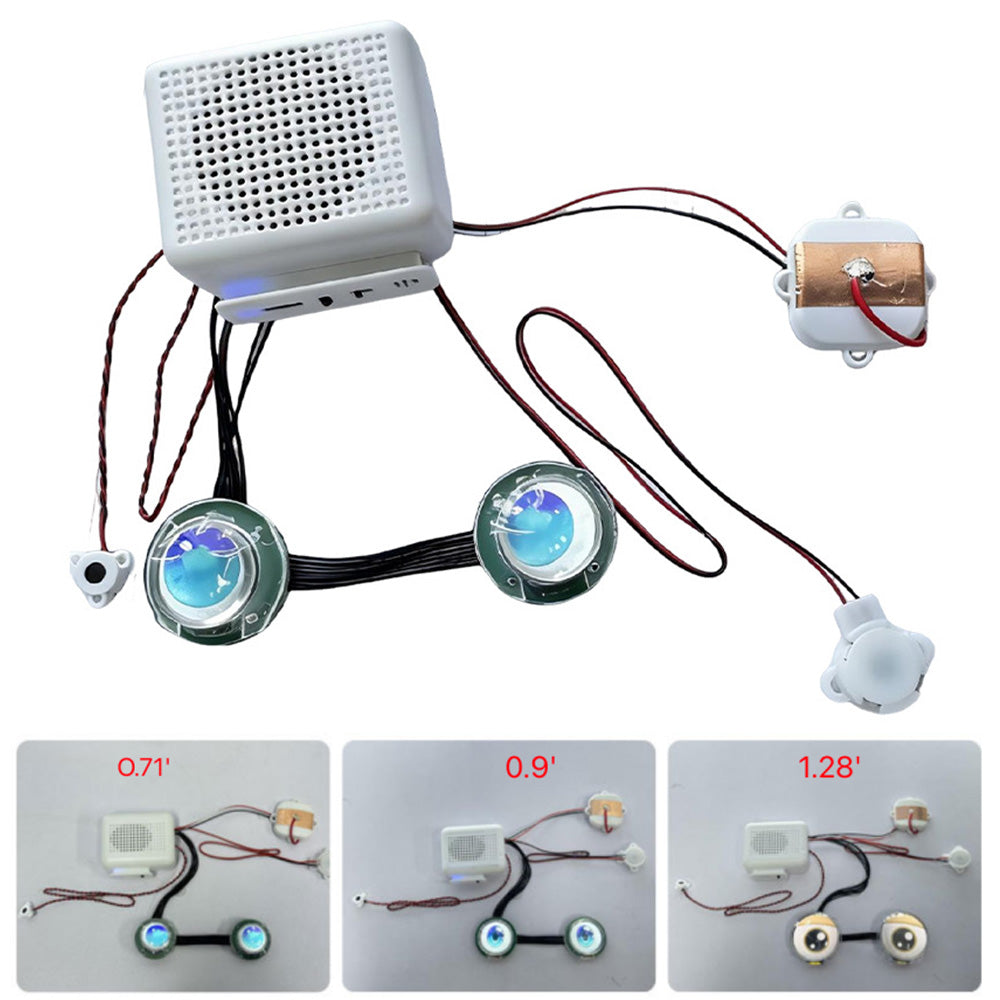
During early engineering, teams may use a development board to validate:
- microphones,
- wake word,
- cloud interaction,
- audio quality,
- sensors,
- and software architecture.
Once the concept is stable, a custom PCBA can reduce size, integrate the required connectors and improve manufacturing efficiency.
That transition is important for plush toys because internal space is usually limited.
A development kit that works on a desk may still be too large or acoustically unsuitable for the final toy body.
Power Design Needs Real Testing
Voice AI products can create varying power loads depending on:
- Wi-Fi activity,
- microphone processing,
- speaker volume,
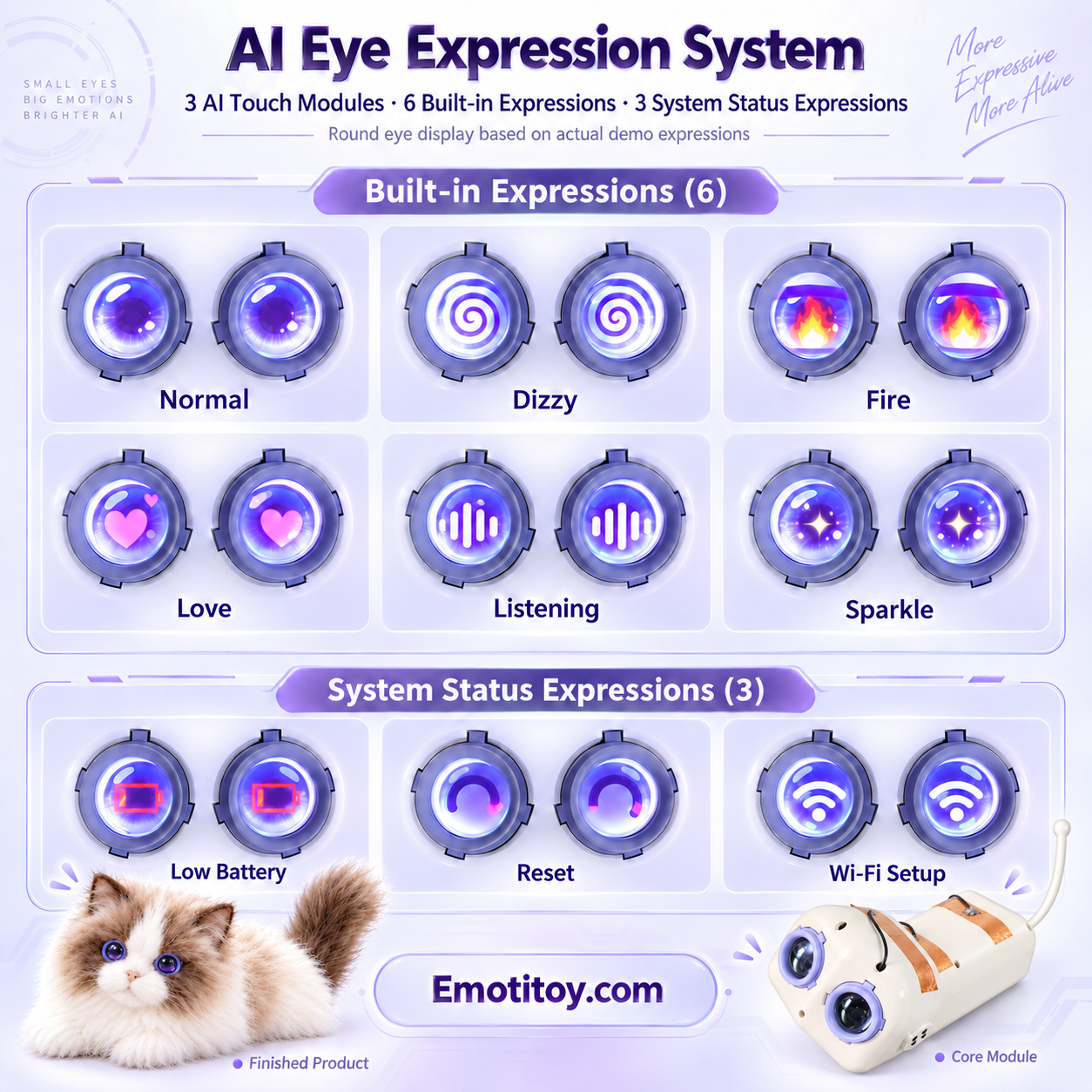
- display or eye modules,
- motors,
- and interaction frequency.
Battery size should therefore be selected after the product's real duty cycle is understood.
A chipset datasheet alone cannot predict finished-toy battery life.
Offline and Cloud Capabilities Should Be Marketed Accurately
A useful terminology distinction is:
Offline wake word
The device can detect a wake phrase locally.
Offline commands
The device can recognize a limited predefined command set locally.
Cloud AI conversation
Open-ended dialogue is processed through cloud AI services.
Fully offline generative AI
A local model handles open-ended generative conversation without internet access.
These are not the same feature.
Clear terminology helps buyers understand what the product actually does.
When ESP32-S3 Is Worth Evaluating
ESP32-S3 can be a strong engineering candidate when a project needs:
- Wi-Fi/BLE connectivity,
- embedded voice processing,
- wake word,
- local commands,
- sensor integration,
- device control,
- and a connection to external cloud AI.
Other chipsets and modules may be better for different products.
The processor should be chosen from the system requirements, not selected only because it is popular.
Engineering Questions Before Choosing the Platform
- Is cloud AI required?
- Is an offline wake word required?
- Which offline commands are required?
- Which languages are needed locally and in the cloud?
- How many microphones are required?
- Is echo cancellation needed?
- What speaker power is required?
- Which sensors or motors must be controlled?
- What battery life is expected?
- What internal PCB size is available?
- Is BLE onboarding required?
- Will a custom PCBA be developed after the demo stage?
ESP32-S3 Is a Building Block, Not the Entire Product
The chipset can provide an effective embedded foundation, but the final AI toy experience still depends on:
acoustics + firmware + connectivity + cloud Agent + industrial design + power + manufacturing.
For OEM/ODM projects, evaluating all of these layers together is more important than selecting the MCU in isolation.
Official Sources
- Espressif — ESP-SR for ESP32-S3
https://docs.espressif.com/projects/esp-sr/en/latest/esp32s3/getting_started/readme.html
- Espressif — Audio Front-End Framework
https://docs.espressif.com/projects/esp-sr/en/latest/esp32s3/audiofrontend/README.html
- Espressif — ESP-VoCat
https://docs.espressif.com/projects/esp-dev-kits/en/latest/esp32s3/esp-vocat/index.html
- Espressif — ESP32-S3 Hardware Design Guidelines
https://docs.espressif.com/projects/esp-hardware-design-guidelines/en/latest/esp32s3/