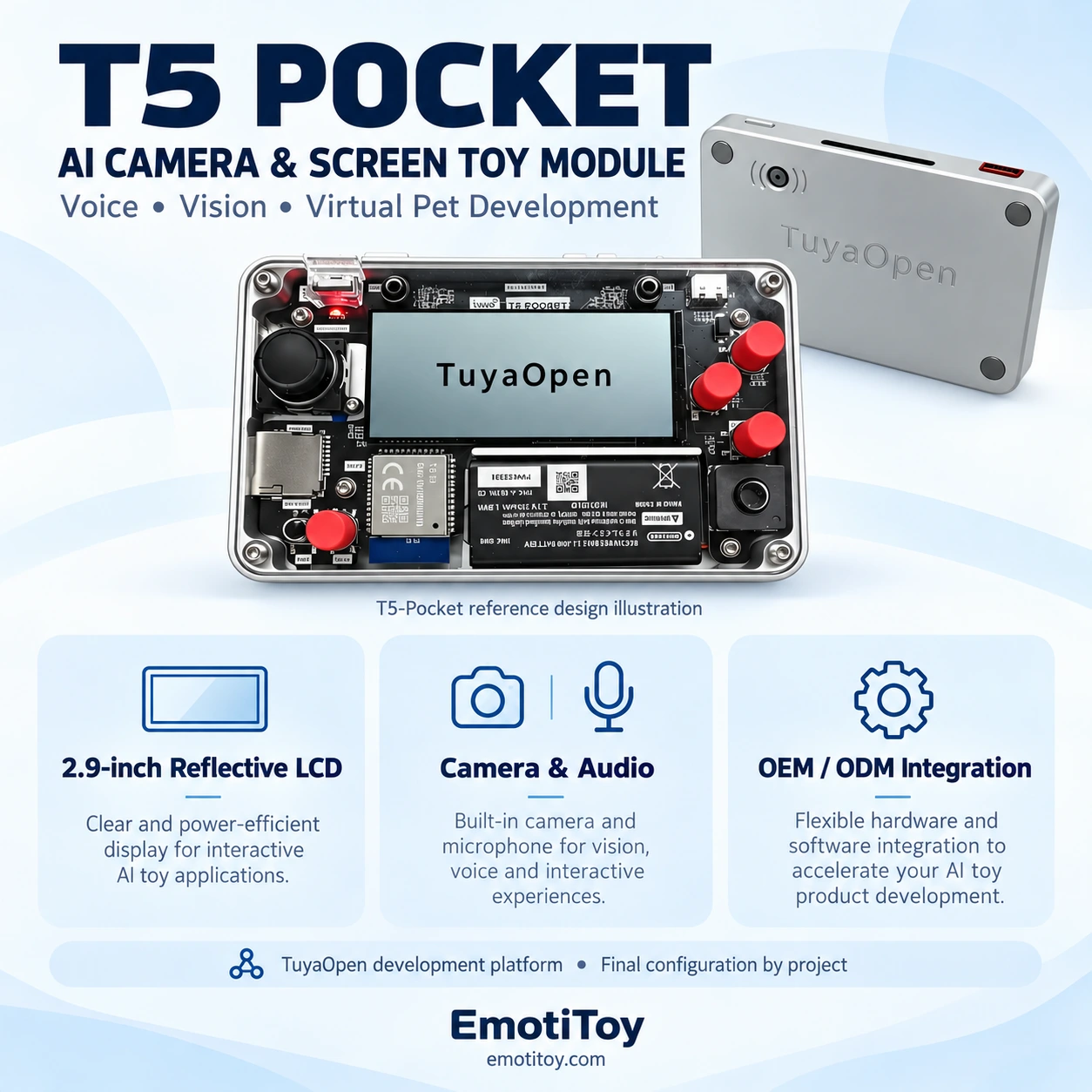
T5 Pocket AI Camera & Screen Toy Module
B2B product from EmotiToy, operated by Shenzhen Xunyi Intelligent Electronics Co., Ltd.
Tell us your target quantity, market, and customization requirements.
Product Details
TuyaOpen T5-Pocket reference-based development for camera, screen and voice toy concepts, with virtual-pet UI and EmotiToy OEM/ODM integration scope.
Camera, Screen and Voice in One Toy Development Platform
T5 Pocket AI Camera & Screen Toy Module is EmotiToy's B2B development direction for compact AI companions, virtual-pet devices and interactive learning products using the TuyaOpen T5-Pocket reference platform. It brings display, camera, audio and physical controls into one development brief.
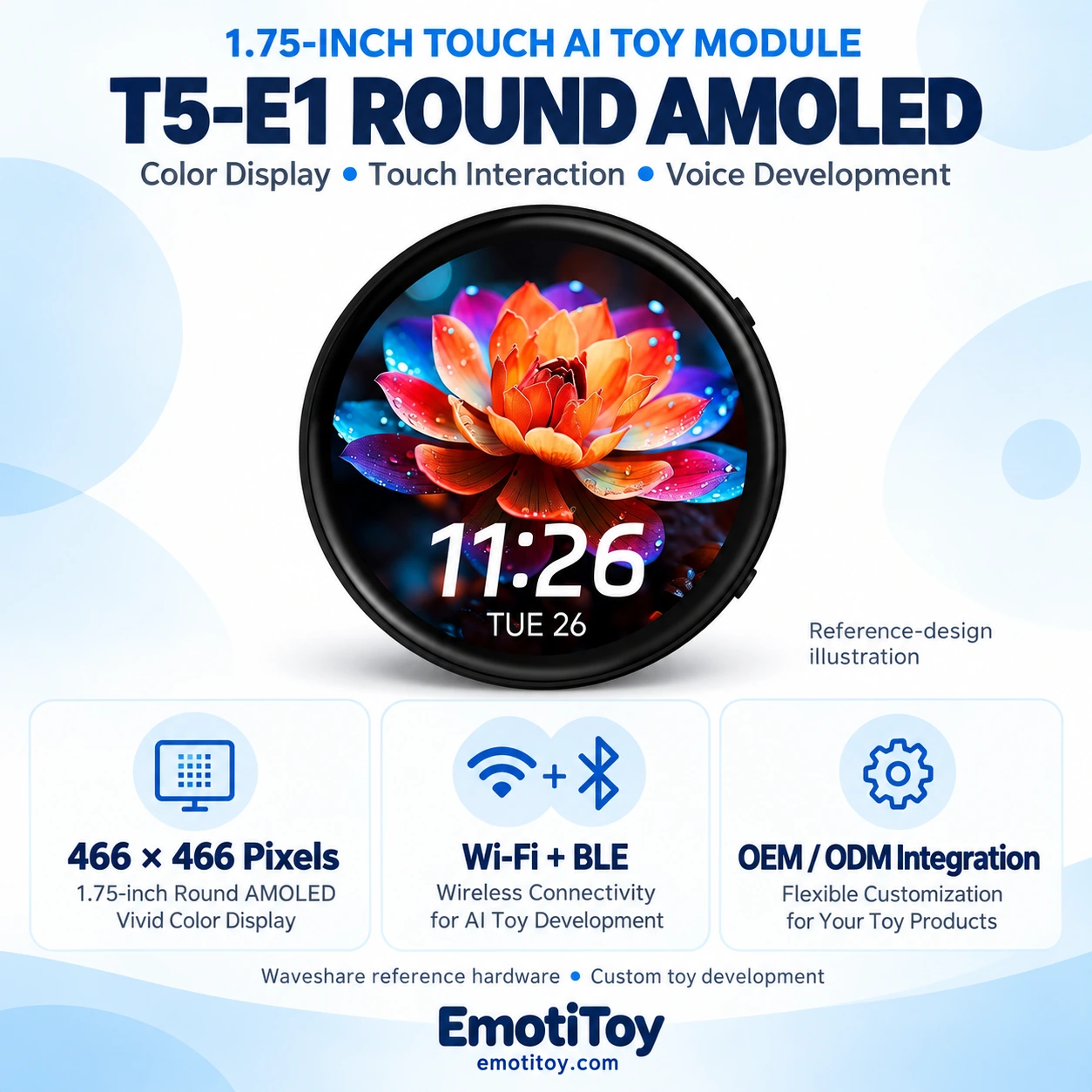
This listing is for project evaluation and OEM/ODM integration. Reference hardware specifications below describe the published T5-Pocket design, not an independently tested EmotiToy production configuration. The main image is a reference-design illustration.
Reference Hardware Specifications
| Item | Published reference configuration |
|---|---|
| Main platform | Tuya T5-E1 with TuyaOpen |
| Wireless | 2.4 GHz Wi-Fi 6 and Bluetooth LE 5.4 |
| Processor | Arm Cortex-M33F, up to 480 MHz |
| Module memory | 8 MB flash and 16 MB PSRAM |
| Screen | 2.9-inch reflective monochrome LCD, 384 × 168 pixels |
| Camera | DVP connection; GC2145 2 MP camera listed in the hardware project |
| Audio | Two digital microphones and one speaker |
| Motion sensing | BMI270 six-axis accelerometer / gyroscope |
| User controls | X/Y joystick and physical buttons |
| Storage | MicroSD expansion |
| Development port | USB Type-C for charging, flashing and debugging |
| Expansion | 10-pin I/O and power / UART Pogo Pin connections |
| Cellular option | Project lists Cat-1 expansion; regional modem, SIM and service selected separately |
T5-E1 supply voltage is specified as 2.5–3.6 V in the module datasheet; this is the embedded radio module rating, not the handheld USB charging-input specification. A finished assembly requires its own power design and approved battery. Dimensions, weight, battery runtime and production configuration are supplied with the selected sample specification.
Reflective Screen and Character Interface
The reference monochrome display and LVGL interface support a visual character experience alongside physical navigation. Official examples include a virtual pet, status menus, simple games and an e-reader. Pet animations and stored pet attributes belong to the application software; they are different from unrestricted AI conversation memory.
For a branded toy, define the character style, menu language, animation states, button labels and interaction flow. A reflective monochrome panel is a deliberate display choice. A color-screen version needs a separate display and firmware review rather than a change to marketing artwork alone.
Voice Interaction and Audio Design
TuyaOpen documents push-to-talk, VAD and wake-word conversation modes. Its T5-Pocket guide identifies Chinese and English speech support in the reference implementation. Other language and voice requirements belong in the project test plan.
EmotiToy can scope the microphone openings, speaker placement, acoustic enclosure, activation method and character-response design with the finished housing. Sample evaluation should include background noise, speaker-to-microphone feedback, response timing and the sound level appropriate to the intended user.
Online dialogue uses the configured network and cloud services. Local menus, stored prompts and selected games are separate from cloud-generated answers. Service regions, account setup, usage charges and the supported AI backend are included in the commercial review; this page does not promise perpetual free service or direct access to every model provider.
Camera-Enabled Toy Concepts
The camera interface provides a route for image-input projects. The official guide describes object recognition and QR-code applications while noting that AI video capabilities continue to be enhanced. Camera presence alone does not establish tested face recognition, identity recognition or continuous video conversation.
A camera-screen toy brief should identify the actual activity: take a picture on button press, send an approved image for a response, or display a scan result. Define the capture indicator, lens opening, user permission, storage rules and deletion controls before implementing the experience. Image quality and response behavior are evaluated using the selected sensor, firmware and backend together.
Movement, Controls and Expansion
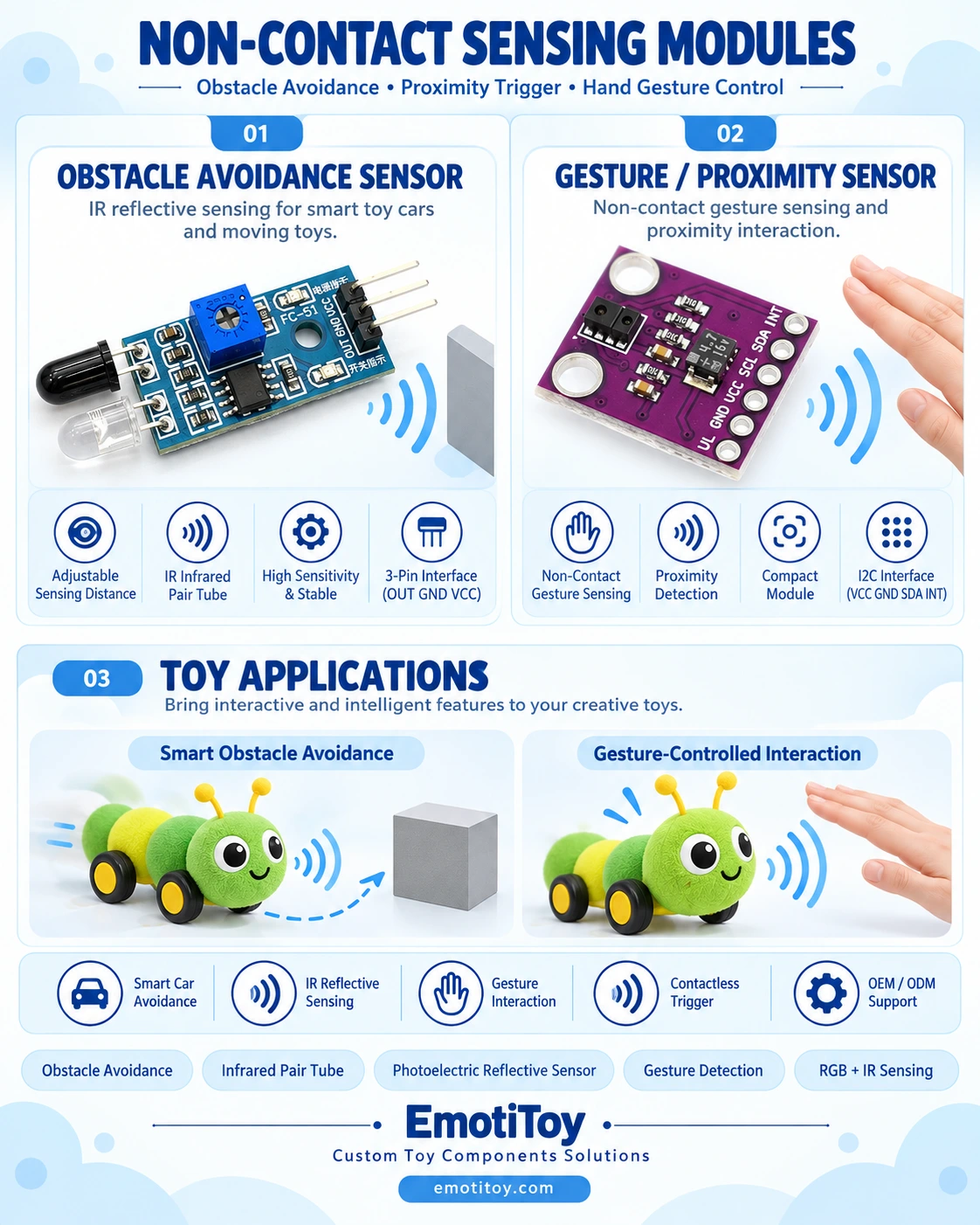
Joystick navigation, buttons and the onboard IMU offer different input methods. Motion sensing measures movement of the device itself; it is distinct from a camera recognizing a person or an optical sensor detecting a nearby hand.
For an expanded toy concept, agree the peripheral list before laying out electronics. A motor or servo requires the appropriate driver and power budget. An external reader or printer is an added peripheral, not a standard accessory implied by the base module. Pin availability, voltage compatibility and firmware support must be checked against the chosen board revision.
Applications for OEM / ODM Buyers
- Pocket AI companions with a screen character, controls and voice interaction.
- Virtual-pet toys with approved artwork, interaction states and local game content.
- Camera-assisted learning concepts built around a defined image-capture activity.
- Desktop character devices with display feedback and optional peripheral integration.
- Prototype platforms for brands evaluating a camera, screen and voice combination before a custom PCB.
These are development applications. They do not imply that every feature is included in every sample or that a developer reference assembly is already a certified retail toy.
Wi-Fi and Optional Cellular Planning
Use the target market and intended setting to choose the connectivity configuration. Wi-Fi suits a known network environment; a cellular version adds modem selection, antenna layout, SIM provisioning, operator compatibility and a separate service cost. The reference project's cellular design does not establish worldwide LTE coverage.
Bluetooth LE support is also separate from Bluetooth music streaming. An A2DP speaker mode should not be assumed from the BLE specification.
TuyaOpen Development and Customization
TuyaOpen supplies a public software framework and T5-Pocket application reference. This development route is separate from the locked firmware in an existing standard AI toy. It does not mean every EmotiToy Tuya-based product can accept the same firmware or expose the same interfaces.
For a custom project, identify the board revision, firmware baseline, cloud configuration and ownership of the application work. EmotiToy's proposed scope can include character UI, enclosure design, control mapping, audio integration, camera placement, peripheral integration and sample preparation. The agreed quotation defines source deliverables, third-party dependencies and production responsibilities.
TuyaOpen software and the linked hardware project have their own licenses and attribution requirements. Hardware design rights and any third-party assets are reviewed before commercial replication; this listing does not assert ownership of the original TuyaOpen design.
Development-to-Production Process
- Define the intended user, market, character concept and required interaction.
- Select the reference hardware, screen, camera, connectivity and peripherals.
- Agree the UI, firmware and cloud-service scope, including image and audio handling.
- Prepare an evaluation sample and test the complete interaction in the target environment.
- Approve the enclosure, power system, functional specification and test requirements.
- Confirm production materials, assembly checks, packaging and commercial terms.
Please send your target size, quantity, market, language needs and key activities with the inquiry. Sample availability, MOQ, development charges, certification scope and lead time are quoted for the agreed configuration.
Frequently Asked Questions
Is this a finished AI camera toy or a development module?
This is a module and integration development listing based on a published reference platform. The supplied assembly, enclosure, firmware and accessories are defined in the project quotation.
Is the screen color or monochrome?
The documented reference uses a reflective monochrome LCD. A color-screen product is a separate configuration.
Are camera AI features ready on every unit?
No. A camera interface and an AI application are different layers. The required capture and recognition task must be implemented and tested with the selected firmware and service.
Can it work without an internet connection?
Local software functions can be designed to operate offline. Cloud AI dialogue requires a working connection and configured service.
Can we customize the character and housing?
Yes, these can be scoped as OEM/ODM development work. Share artwork, mechanical constraints and the desired user flow for evaluation.
Official Technical References
- TuyaOpen T5-Pocket guide
- T5-Pocket hardware project
- TuyaOpen software repository and license
- Tuya T5-E1 module datasheet
Technical reference reviewed on 31 October 2026. TuyaOpen and T5-Pocket identify the original third-party platform; EmotiToy provides the project inquiry and integration scope described here.
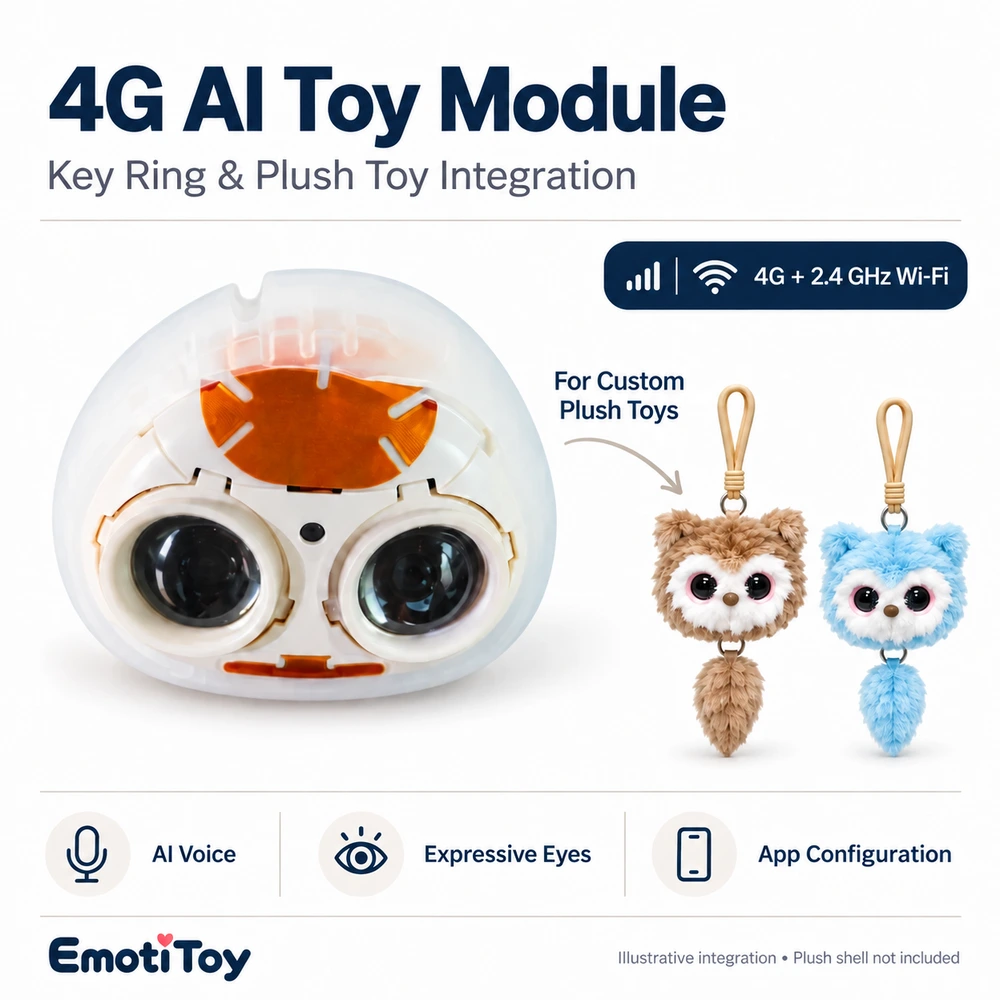
Request an OEM / ODM review or explore AI Movement Box, Toy Components and the 4G AI Toy Module. These are related development directions, not interchangeable hardware.
Product Specifications
- Platform
- TuyaOpen T5-Pocket reference; T5-E1
- Reference display
- 2.9-inch reflective monochrome LCD, 384 × 168
- Reference camera
- GC2145 2 MP; DVP interface
- Wireless
- 2.4 GHz Wi-Fi 6 and Bluetooth LE 5.4
- Audio / Controls
- Two digital microphones, speaker, joystick and buttons
- Motion / Storage
- BMI270 six-axis IMU; MicroSD expansion
- Expansion / USB
- 10-pin I/O, power/UART Pogo Pin and USB Type-C
- Commercial scope
- OEM/ODM development; supplied configuration agreed per project
Related sourcing resources
Product functions and commercial terms are confirmed for each OEM or ODM project. Review the relevant manufacturing guide before sending your requirements.